


 English
 中文简体
What Makes a Micro-Mesh Piezo Atomizer Disc Ideal for Humidification and Cooling Systems?
Humidification and evaporative cooling share a single, unforgiving performance metric: how fast a droplet disappears into the air. A mist that lands on a surface as visible water has failed its job. It cools nothing, humidifies unevenly, and leaves behind a film that becomes a breeding ground for odor and biofilm. This is the quiet limitation that has pushed engineers away from conventional solid-orifice ultrasonic discs in high-end appliances.
A micro-mesh piezo atomizer disc approaches the problem from a different direction. Instead of blasting a water surface apart with a high-frequency ceramic ring, it forces liquid through laser-drilled micropores in a vibrating membrane, breaking the stream into a dense cloud of micron-scale droplets. The result is a mist that evaporates almost on contact, a reservoir that stays cleaner, and an actuator small enough to fit inside a desktop fan, a wearable cooling vest, or a precision HVAC duct module.
The sections below break down the working principle, the performance advantages, the selection variables that decide whether a design succeeds or fails, and the questions worth asking before any purchase order is raised.
How Does a Micro-Mesh Piezo Atomizer Disc Actually Work?
The mechanism is often described loosely as ultrasonic atomization, which hides the most important detail. A micro-mesh disc does not atomize by cavitation at the liquid surface. It atomizes by extrusion through a perforated membrane, and that distinction explains nearly every performance difference that follows.
From Vibration to Fine Mist: The Piezoelectric Micropump Effect
A lead-free or PZT-based piezoelectric ceramic ring is bonded to a thin metal membrane. When an alternating voltage is applied at the membrane resonant frequency, the ceramic expands and contracts, driving the membrane into a high-frequency bending vibration. Liquid is drawn to the back of the membrane, typically through a wick or a small reservoir chamber, and the oscillating micropores act as thousands of microscopic pumps.
- Extrusion, not explosion: liquid is pushed through each pore and pinched off into a droplet whose diameter is tied to the pore size, not to the drive frequency alone.
- Pore geometry matters: typical pore diameters sit in the 3 to 10 micron range, laser-drilled and electro-formed for repeatability.
- Lower drive frequency: most micro-mesh discs operate in the 100 to 180 kHz band, well below the 1.7 MHz and higher frequencies used by solid-orifice mist makers.
Why Lead-Free Piezoelectric Materials Are Gaining Ground
For products sold into European and North American channels, material compliance has moved from a checkbox to a procurement gate. Potassium sodium niobate based ceramics, commonly referred to as KNN, offer a lead-free alternative to conventional PZT compositions. The trade-off is a narrower operating window and greater sensitivity to drive tuning, but for consumer humidifiers and personal cooling devices the environmental compliance benefit often outweighs the engineering effort. Designers evaluating a lead-free path should request impedance curves at the intended drive voltage rather than relying on nominal capacitance figures alone.
Why Is It the Superior Choice for Humidification and Cooling?
The case for micro-mesh technology rests on three measurable outcomes: droplet size, residual water, and physical integration. Each maps directly to a failure mode that conventional solid-orifice discs struggle to escape.
Ultra-Fine Droplets Mean Faster Evaporative Cooling
Evaporative cooling is a surface-area problem. A 30 micron droplet has roughly one-thirtieth the surface-to-volume ratio of a 1 micron droplet of the same total volume, and it takes correspondingly longer to absorb latent heat from the surrounding air. Micro-mesh discs routinely produce a median droplet diameter in the 3 to 5 micron range, which is small enough that a substantial fraction of the mist evaporates within the first meter of travel.
In practical misting fan designs, this translates to a measurable local temperature drop of 2 to 5 degrees Celsius in the air stream, without the wet-bulb penalty of coarse spray. The same principle applies inside air-handling ducts, where fine mist absorbs heat from the air stream before it can condense on duct walls.
| Performance Parameter | Solid-Orifice Ultrasonic Disc | Micro-Mesh Piezo Atomizer Disc |
|---|---|---|
| Typical median droplet size | 15 to 40 microns | 3 to 5 microns |
| Residual water in reservoir area | Moderate to high | Very low |
| Typical drive frequency | 1.7 MHz and above | 100 to 180 kHz |
| White dust risk with hard water | Higher | Lower with proper wick design |
| Integration footprint | Larger resonator assembly | Compact disc, as small as 8 mm diameter |
Low Residual Volume and Better Hygiene
Every milliliter of water that remains in a humidifier after a cycle is an invitation for microbial growth. Solid-orifice discs rely on a standing water pool above the transducer and often leave a shallow layer behind. A micro-mesh disc fed by a wick draws liquid directly to the membrane, so the wetted volume is small and the tank bottom stays dry during normal operation.
The trade-off is a stricter water quality requirement. Mineral-rich water can precipitate inside micropores, and once a pore is scaled it cannot be recovered by simple rinsing. The standard mitigation is a two-part strategy: specify softened or purified water where the application allows it, and pair the disc with a wick whose uptake rate matches the atomization rate so the membrane never runs dry.
Compact Form Factor for Modern Cooling Appliances
A 13.8 mm diameter disc assembly, including its housing and contacts, occupies less volume than a typical thumb drive. That footprint is what makes the technology viable in products where a conventional mist maker would never fit.
- Desktop and portable misting fans: the disc sits in the airflow path with minimal obstruction.
- Personal cooling garments: low power draw allows battery operation over a full shift.
- Precision cooling modules: direct duct injection without a separate atomization chamber.
Typical operating power falls between 0.8 W and 1.5 W, which is compatible with USB power delivery and small lithium battery packs. For a design team balancing thermal performance against battery life, that figure is often the deciding variable.
Key Selection Criteria for Engineers: Avoiding the Top Three Pitfalls
Most field failures with micro-mesh atomizers are not material failures. They are specification mismatches that only appear after the first production run. The three variables below account for the majority of them.
Pore Diameter and Pore Count Versus Target Flow Rate
Pore diameter and pore count pull in opposite directions. Smaller pores produce finer mist but clog sooner and pass less liquid per unit time. More pores raise output but increase drive power and membrane stress. The correct starting point is the required humidification rate in milliliters per hour, not the pore specification.
| Typical Disc Format | Nominal Pore Size | Pore Count Range | Indicative Output | Common Use |
|---|---|---|---|---|
| Compact 8 mm | 5 to 7 microns | 200 to 400 | Low, tens of ml/h | Wearable and hand-held cooling |
| Standard 13.8 mm | 6 to 8 microns | 500 to 700 | Moderate, up to roughly 150 ml/h | Desktop misting fans, small humidifiers |
| High-flow 16 mm | 7 to 10 microns | 800 to 1200 | High, above 200 ml/h | HVAC modules, greenhouse cooling |
Treat these ranges as orientation only. Final output depends on wick feed rate, drive waveform, and ambient conditions, and should be confirmed on a test bench before tooling is committed.
Drive Frequency Matching in the 100 to 180 kHz Band
Micro-mesh discs run at a fraction of the frequency used by solid-orifice transducers, which changes the driver design substantially. The resonant frequency of a disc shifts with temperature, liquid load, and manufacturing spread, so a fixed-frequency driver will drift away from resonance and lose output. An auto-frequency-tracking driver that sweeps and locks onto the impedance minimum is not optional for production units; it is the difference between a stable product and a warranty problem.
Water Quality and Wick Compatibility
Two failure modes dominate field returns. The first is scale inside the pores from hard water. The second is dry running, where the wick cannot deliver liquid as fast as the disc atomizes it, causing the membrane to overheat and crack. Both are design-stage problems with design-stage solutions.
- Specify the water source in the product manual and, where feasible, add a softening stage.
- Match wick capillary rate to atomization rate with a margin of at least 20 percent.
- Include a dry-run detection circuit that cuts drive power when impedance indicates an empty feed.
Real-World Applications: Where Micro-Mesh Discs Outperform
The technology earns its place in applications where mist quality is visible to the user or where water residue carries a real cost. Three categories illustrate the pattern.
Portable Misting Fans and Personal Cooling
A representative configuration uses a 600-pore disc with 7 micron pores and a resonant frequency near 150 kHz. In a well-tuned fan housing, acoustic output stays below 35 dB at one meter, which is quiet enough for office and bedroom use. The fine mist evaporates within the airflow instead of depositing on the user or the surrounding furniture, and the low power draw allows a single charge to cover several hours of intermittent operation.
HVAC and Industrial Humidification
In duct-mounted humidification, the visible symptom of a poor atomizer is white dust: calcium and magnesium particles left behind when hard water droplets dry on surfaces. Because micro-mesh discs produce droplets that evaporate quickly and leave minimal residue, they reduce this risk substantially, although they do not eliminate the need for water treatment. In clean rooms and data halls, that reduction directly protects sensitive equipment from particulate deposition.
Greenhouse and Agricultural Cooling
Greenhouse cooling combines high duty cycles with corrosive water chemistry. Discs built on 316L stainless steel substrates resist pitting and extend service life in these conditions. Growers typically measure success by leaf-surface temperature and relative humidity uniformity rather than by visible mist, and the fine droplet spectrum of a mesh disc delivers both more consistently than coarse spray systems.
How to Choose a Reliable Micro-Mesh Piezo Atomizer Disc Supplier
Micro-mesh discs are precision consumables. Two suppliers can quote the same nominal specification and deliver parts that behave very differently in the field, because pore consistency and membrane bonding dominate real-world performance. The evaluation process should focus on evidence, not on catalog numbers.
What to Ask Before You Request a Quote
- Impedance curve: confirms the resonant behavior across the intended drive range.
- Free-air resonant frequency: the baseline against which driver tracking is tuned.
- Life test data: continuous operation beyond 3000 hours, with output degradation recorded.
- Pore size distribution report: a mean value alone is insufficient; the spread determines consistency.
Why In-House Testing Matters More Than Datasheets
A datasheet describes a part on a bench. A product describes a part under load. The interaction between the driver algorithm and the disc is where most performance is won or lost, and no datasheet can capture it. Buyers should insist on evaluating samples with their own driver board, their own wick, and their own water chemistry before committing to volume. A supplier that supports this process with engineering consultation, rather than only a price list, is usually the better long-term partner.
When submitting a request, include the target flow rate in milliliters per hour, the available voltage platform, and the mechanical size constraint. These three inputs are enough to narrow the field to a small number of viable specifications and to produce a meaningful quotation rather than a generic response.
Frequently Asked Questions
Q1: What is the difference between a micro-mesh disc and a standard ultrasonic mist maker?
A micro-mesh piezo atomizer disc forces liquid through laser-drilled holes in a vibrating membrane, producing finer droplets with far lower residual volume than a standard solid-disc mister, which atomizes by cavitation at a standing water surface.
Q2: Can I use tap water with a micro-mesh atomizer for cooling?
It is possible but not recommended. Mineral content in tap water can precipitate inside the micropores and permanently reduce output. For cooling applications, softened or purified water is strongly preferred, and a wick matched to the atomization rate should always be used.
Q3: What is the typical lifespan of a piezo micro-mesh disc in continuous humidification?
Well-designed discs commonly reach 3000 hours or more of continuous operation before output degradation becomes significant. Actual life depends heavily on water quality, wick feed stability, and driver tuning, so life test data from the specific supplier should be requested.
Q4: Why does the drive frequency differ so much from conventional mist makers?
Micro-mesh discs atomize by extrusion through pores rather than by surface cavitation, so they operate efficiently in the 100 to 180 kHz range. This lower frequency reduces acoustic noise and changes the driver requirements, making auto-frequency tracking essential.
Q5: What information is needed to get an accurate quotation?
Provide the target atomization rate in milliliters per hour, the supply voltage and power budget, the allowable disc diameter, and the intended water source. These details allow a supplier to recommend a specific pore size and count combination and to quote against a realistic specification.
Related Products
-
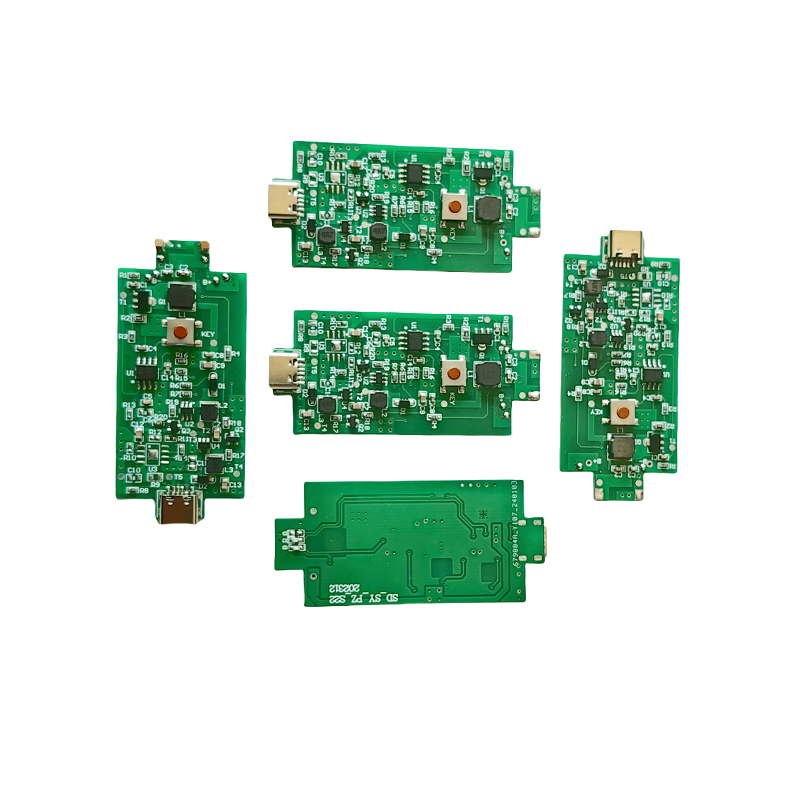
Humidifier Aromatherapy Humidifier Misting Tray PCB Board USB6V12V24V Five Head PCB Driver Board 10 Head Driver Board
-
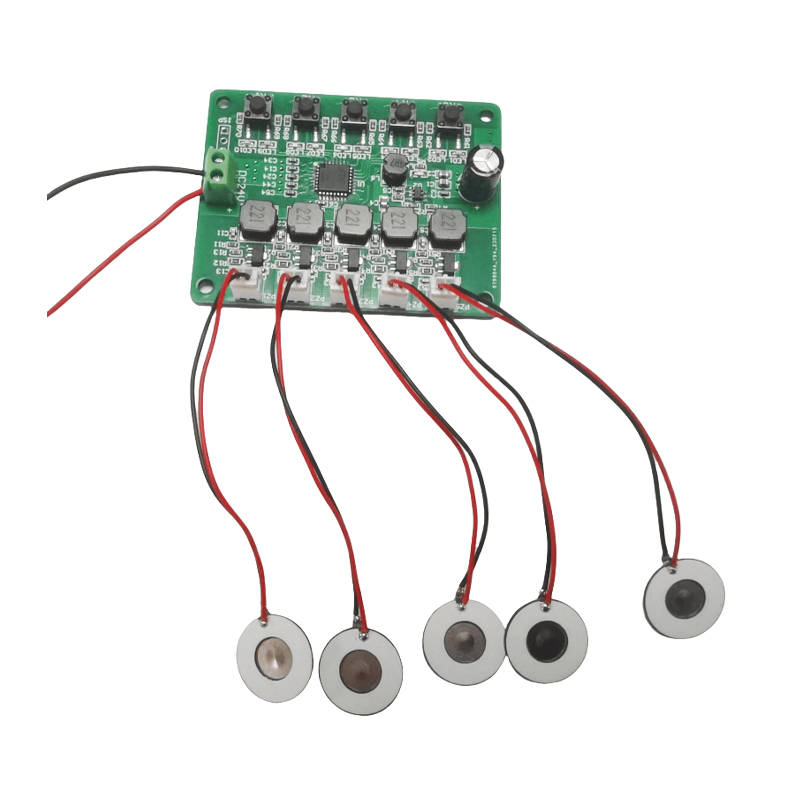
Medical Inhalation Nebulizer Respirator Head-mounted Nebulizer PCB Driver B
-
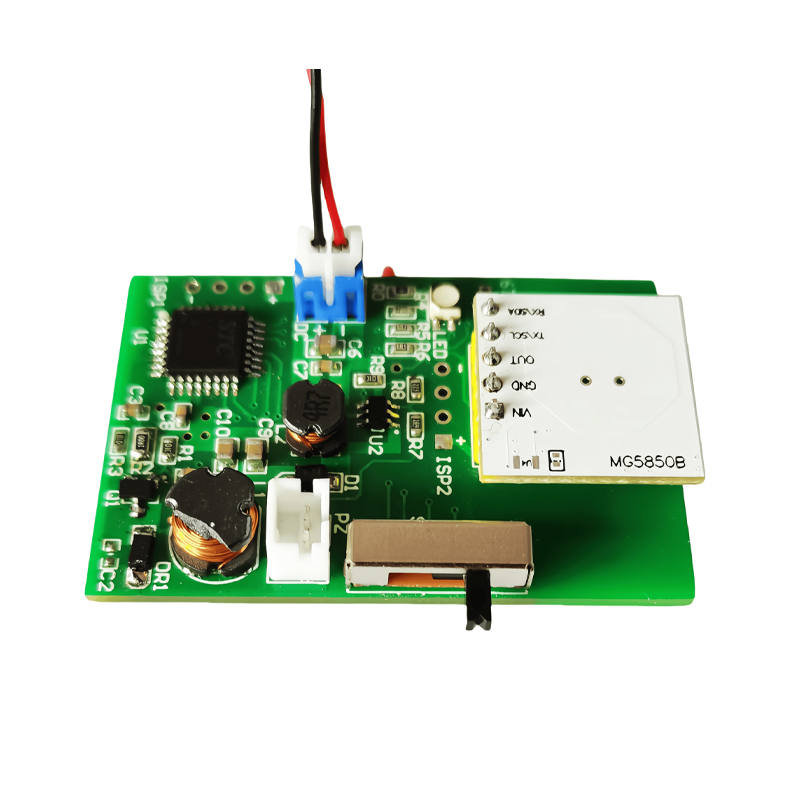
Medical Mesh Atomizer Tray PCB Electronic Smoking Cessation Atomizer PCB Driver Board
-
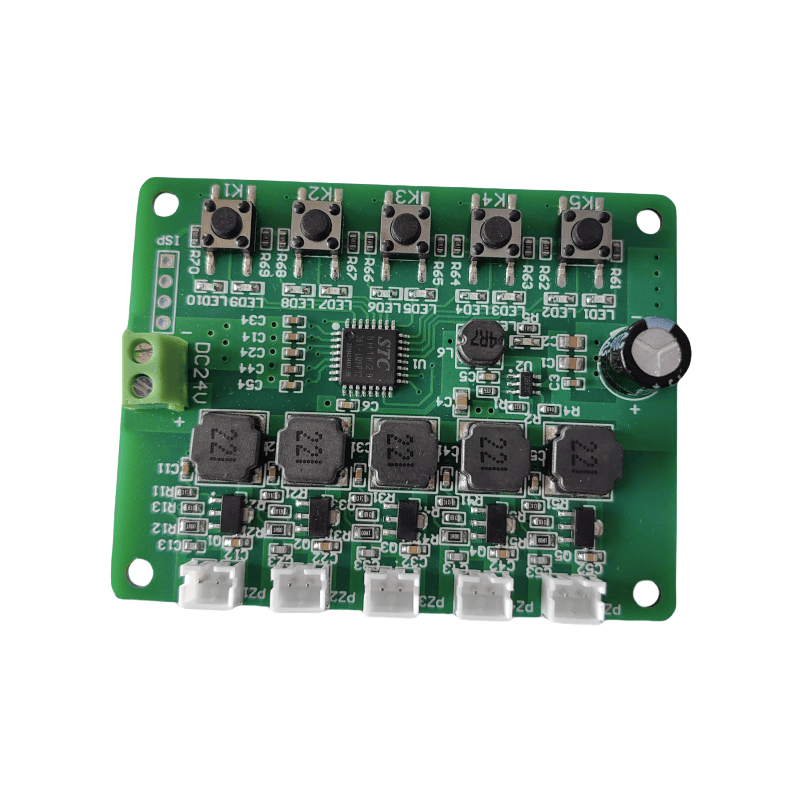
Driver Board For Humidifier Crescent PCB Board Timing 2/4h Function 1.5W
-
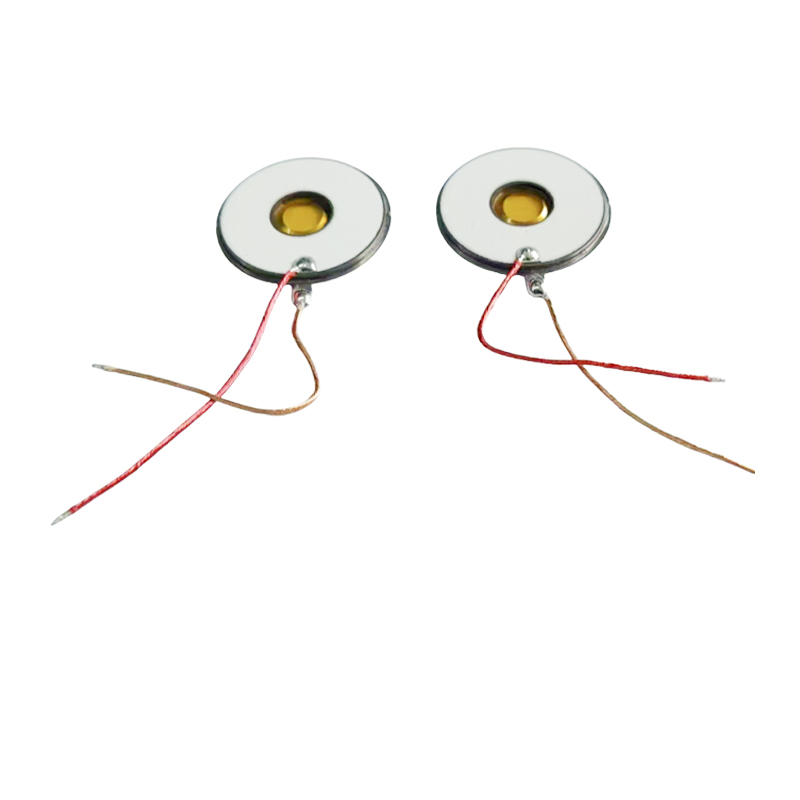
M16-108KHZ Polyimide PI MembraneMesh Micro Mesh NebulizerMedical NebulizerUltrasonic Mesh Nebulizer3μm Microporous Inhalation Nebulizer With Nebulizing DiscPower Consumption1~1.5W
-
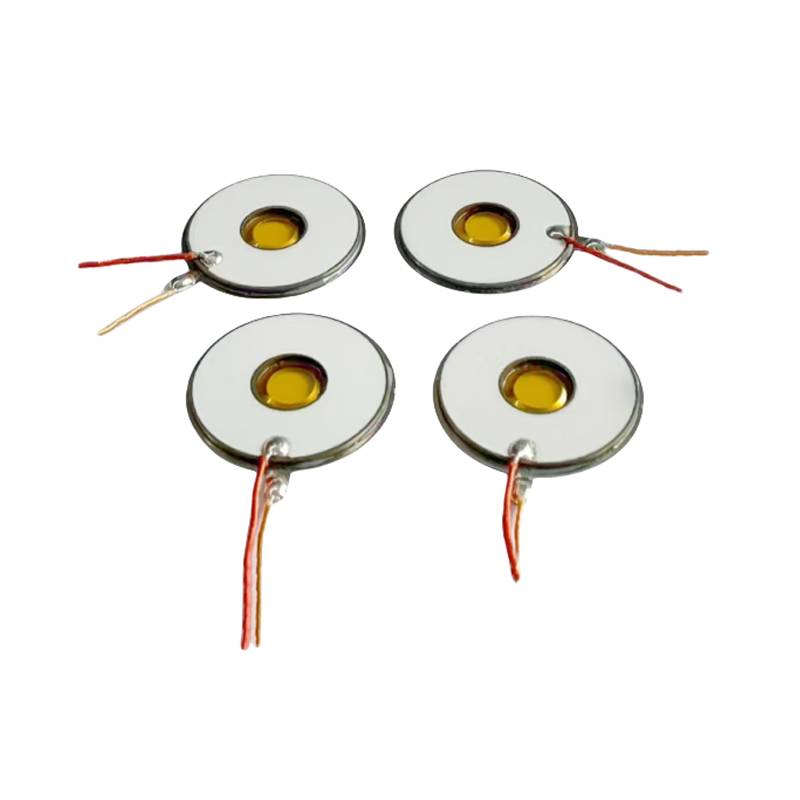
M16-108KHZ Polyimide PI MembraneMesh Micro Mesh NebulizerMedical NebulizerUltrasonic Mesh Nebulizer3μm Microporous Nebulizer Disc For Inhaler Nebulizer
-
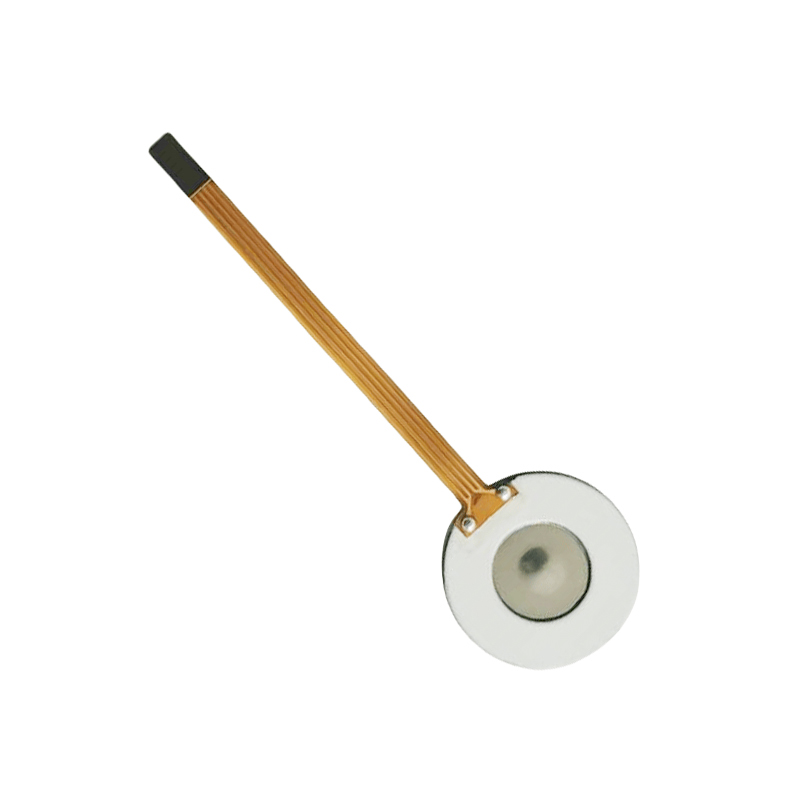
M16-110KHZ Polyimide PI MembraneMesh Micro Mesh NebulizerMedical NebulizerUltrasonic Mesh Nebulizer3μm Microporous Nebulizer Disc For Inhalation Nebulizer
-
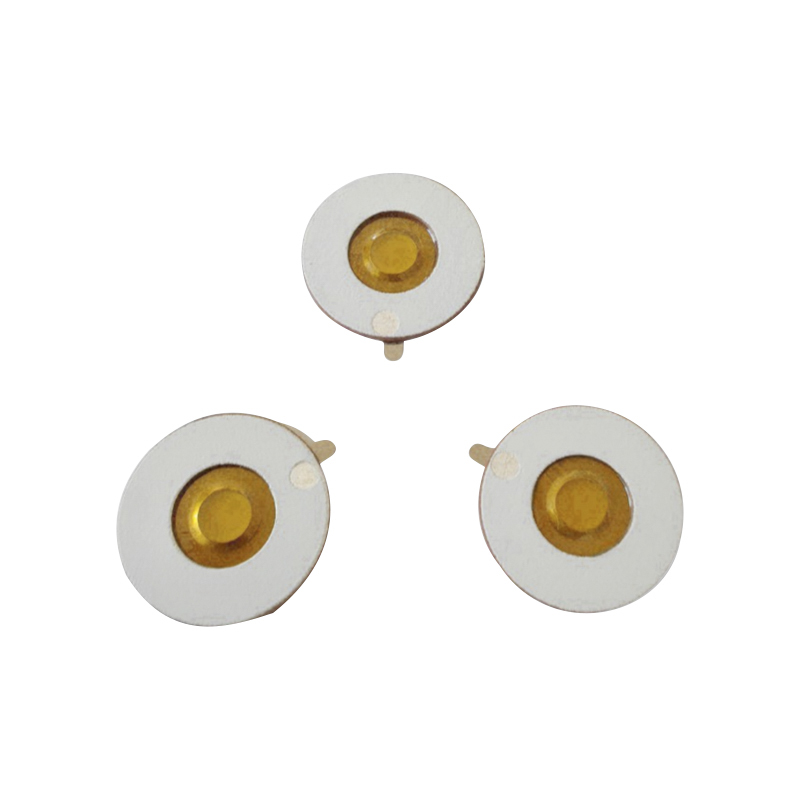
M16-108KHZ Polyimide PI MembraneMesh Micro Mesh NebulizerMedical NebulizerUltrasonic Mesh Nebulizer Tablet3μm Microporous Inhalation Budesonide Nebulizer Tray
- Quick Links
- Product
- About
- Application
- News
- Contact
- Product Links
- Medical Mesh Piezo Atomizer
- Polymer PI Film Piezo Atomizer
- KNN Lead-free Mesh Piezo Atomizer
- PI Lead Free Mesh Zeroing Chip
- Micro-mesh Piezo Atomizer For Heater
- Piezo Atomizer For Fan/Humidification/Beauty
- Ultrasonic Atomizing Transducer
- Ultrasonic High-frequency Piezo Atomizer
- Power Generation/Heating Sensor Piezo Atomizer
- Medical Piezo Atomizer PCB Design
- Precision Laser Micro-hole Processing Technology
- Contact
-
Building 1, Fortune Star 2, No.311 Huanzhen North Road, Chang'an Town, Haining City, Zhejiang Province, China.

-
+86-18006619680

-
+86-13777879680

-
Felix@saidapiezo.com

riney@saidapiezo.com
yugao@saidapiezo.com
emily@saidapiezo.com
dean@saidapiezo.com -
Felix: +86 18157327658

John: +86 18957351358
Emily: +86 18957339358
Dean: +86 15356418868
- Mobile